A commissioned textile is not so much a purchase as an agreement about how something will be made. Long before the first sketch, before the dye pots are set out or the loom is warped, there is a conversation — and the quality of that conversation shapes everything that follows. The five questions below are the ones worth asking early, ideally in a single email, so that the answers exist in writing and both sides know what they have agreed to. None of them requires technical knowledge. They only require that you ask them while the work is still an idea.
1. Where Will the Piece Actually Live?
Start with the room, not the object. A wall hanging above a radiator, a rug in a hallway with three doors, a bedcover in a bedroom that gets direct morning sun: each of these changes what an artist will recommend. Photograph the space from a few angles, note which direction the window faces, and measure the wall or floor area you have in mind. If you can, mark the intended footprint with painter's tape and live with it for a day. It is much easier to reconsider a rectangle of tape than a finished piece.
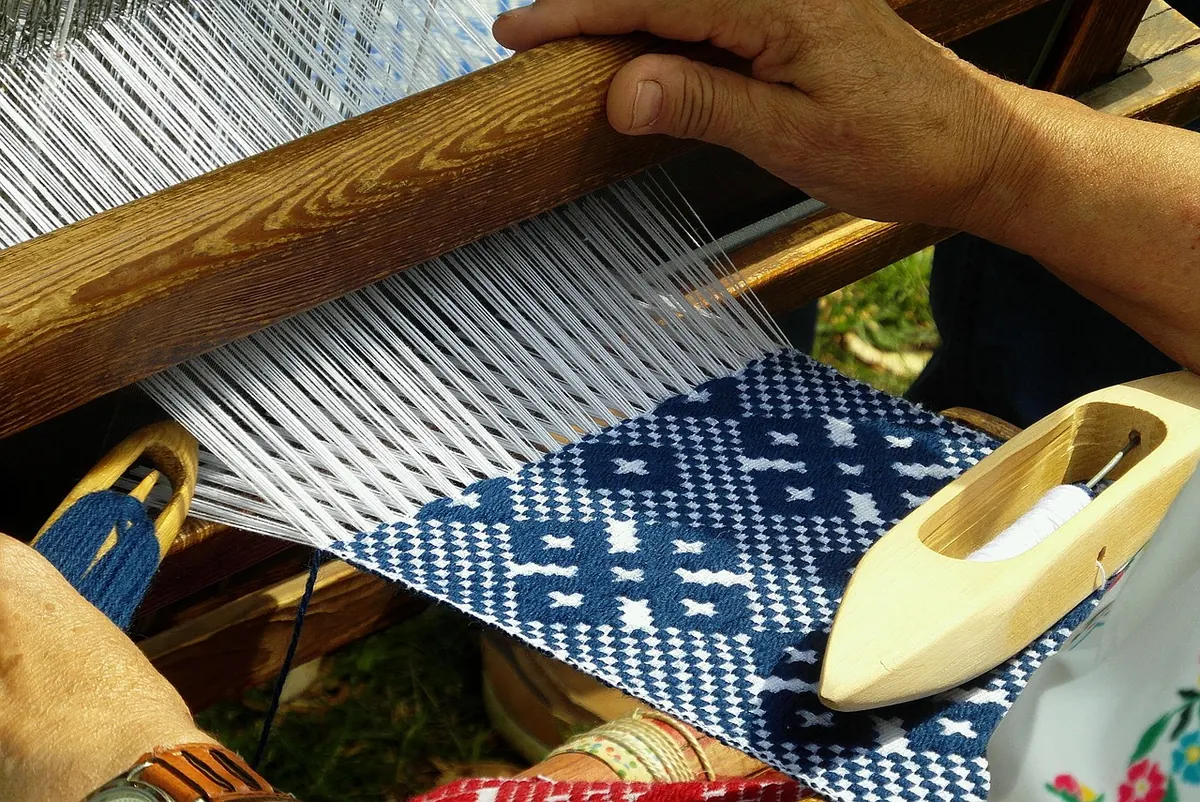
Then talk about limits. Weavers are constrained by the width of their loom, so a piece wider than that will either be seamed or made on different equipment — both are legitimate, but you should know which you are getting. Ask how the piece will hang: a sewn sleeve, a rod pocket, a dowel, a stretched frame, or a more sculptural mount. Weight matters more than most collectors expect, especially with heavily felted, beaded or densely woven work, so ask what the finished piece will weigh and what kind of fixing it needs. Nobody wants to discover on delivery day that the wall cannot hold it.
2. What Is It Made Of, and How Will It Age?
Fibre choice is not a detail. Wool, linen, cotton, silk, paper yarn and recycled blends behave differently under light, in humidity and underfoot. Ask what the piece is made from and why the artist chose it. If natural dyes are involved, ask how lightfast they are and whether the artist expects the colour to shift over the years — many naturally dyed textiles soften or deepen with exposure, and that is part of their character rather than a fault. You simply want to hear it before you hang the work opposite a south-facing window.
Ask for a sample
Most textile artists will send or show a small swatch, a dye test or a photograph of a previous piece in the same palette. Some charge for this and credit the fee against the commission; that is a reasonable arrangement and a good sign of someone who takes sampling seriously. A sample answers questions a photograph cannot: how the surface feels, how stiff or fluid it is, whether the colour reads warm or cool in your own room.
It is also fair to ask what happens if a yarn or dye is discontinued mid-project. A clear plan — a close substitute agreed in advance, or a pause to discuss options — is worth more than a promise that nothing will go wrong.
3. What Does the Timeline Look Like, and What Could Move It?
Ask for a schedule rather than a date. A good one has stages: design agreement, sample approval, start of making, a progress photograph or studio visit at the midpoint, finishing, and delivery. Ask what part of the process is most vulnerable to delay. Humidity slows drying; yarn orders arrive late; a craft fair swallows a fortnight. None of these is a crisis if it was mentioned at the start.
Be equally clear about your own side of the bargain. Approvals that sit unanswered for three weeks will push everything back, and artists reasonably build in for that. If you have a hard deadline — an anniversary, an exhibition, a house move — say so in the first conversation, not the fourth. Some techniques cannot be rushed without changing the result, and an artist who tells you that is being honest rather than difficult.
Finally, ask how the piece will travel. Crating, insurance in transit and who is responsible at each stage are unglamorous questions with very practical answers.
4. How Do You Care for It Once It Is Yours?
Request written care instructions before delivery, not after. The answers vary enormously: some wall pieces want nothing more than an annual vacuum through a mesh screen, some benefit from occasional airing, some should never be washed at all. Wool needs protection from moths. Anything framed under glass needs a gap and, ideally, no glass at all if the room is damp, since trapped moisture does not end well for fibre.
Ask about repairs, too. A snapped thread or a single moth hole is often fixable by the maker and nearly invisible afterwards; the same damage handled by a general dry cleaner may not be. If the piece is something you intend to keep for decades or pass on, ask what documentation comes with it — material list, dye notes, title, date, signature. A one-page file that travels with the work is a small thing that becomes valuable later.
5. What Exactly Does the Budget Cover?
Ask for a written quote that itemises rather than a single figure. The total will vary wildly between artists and techniques, which is exactly why the breakdown matters. A well-made quote tends to include:
- Design and sampling time, including any swatches sent to you
- Materials, with a note on whether the artist absorbs price changes
- Studio time and finishing
- Mounting, hanging hardware or framing, if included
- Crating, shipping and insurance in transit
- Taxes and any import duties if the piece crosses a border
Then ask about the payment schedule: a deposit to reserve studio time, staged payments at agreed milestones, and the balance on delivery or on approval. Both are normal; what matters is that you know which you have agreed to. Ask, too, about changes. Most artists will accommodate a shift in direction at the sketch or sample stage and charge for one requested halfway through making, which is fair on both sides.
Two more things belong in the same conversation. Clarify who owns what: in most commissions you buy the object, while the artist keeps the right to photograph it and show it in a portfolio. If that matters to you, say so early and put it in writing. And if the sums involved are significant for you, have the agreement looked over before you sign — a short written contract protects the artist as much as the collector.
Before the First Meeting
You do not need to arrive with a design. You need to arrive with information and a few prepared questions. Send them by email before you meet, so the answers are there to reread when the excitement of the studio visit has worn off.
- Photograph and measure the intended space, and note the light.
- Write down your deadline, if you have one, and say whether it is fixed.
- Ask for a sample and a written quote with a payment schedule.
- Ask what could delay the work, and what you are expected to approve and when.
- Request care instructions and, for a significant piece, a short written agreement.
A good commission feels less like ordering and more like a collaboration with clear edges. The artists worth working with will welcome these questions — they have usually learned the hard way that a vague brief costs everyone time. Ask them plainly, keep the answers, and the piece that arrives will be the one you actually planned for.
Photo: Anna Tarazevich / Pexels