A skein of cotton ordered in a dry February and an identical skein ordered in a sticky August can arrive feeling like two different materials. One is springy and light. The other has a faint weight to it, a coolness in the hand, and it will behave differently on the loom or under the needle. Nothing is wrong with the yarn. It is simply doing what plant fibre does, drawing moisture out of the air until it reaches balance with the room.
Buying and storing in a humid climate comes down to timing and layering: choosing the moment when materials are driest, then slowing the exchange with the air around them. What follows is a working method rather than a laboratory protocol — the routine that keeps a studio's worth of fibres, dyes and finished pieces usable through a wet season.
What the Air Actually Does to Your Materials
Cotton, linen, hemp and other plant fibres are hygroscopic. They swell across their width as they take up water, which changes how a thread passes through itself, how a fabric drapes and how much a dye bath will strike. Wool is the deceptive one: it can hold a surprising amount of moisture before it feels damp at all, which is why a fleece can smell close and woolly before you notice anything wrong with it. Silk is strong when dry and noticeably weaker when wet, and it water-spots easily, so a damp storage box is a poor home for a fine silk warp.
On the shelf, the problem is rarely uniform. A cone of yarn wound tight will take moisture into its outer layers while the core stays dry, so the outside feels clammy and the inside is fine — or the reverse. Dye powders and mordants are hygroscopic too. Reactive and acid dyes cake, natural dye powders clump into bricks, and iron mordant rusts quietly through its own packaging. Once a powder has absorbed water, weighing it accurately becomes guesswork, and every recipe that follows drifts.
Buying by the Seasons
Late winter to early spring
This is the window for bulk buying. Heating is still on, indoor air is at its driest, and a parcel that arrives can go straight into containers without a drying detour. Order the materials that suffer most from damp: fine silks, felting wool, natural dye powders, large cones of cotton and linen, and any quantity you plan to keep for more than a few months. If you buy once a year, buy now.
Late spring
Before the wet months settle in, take stock rather than adding to it. Open the boxes, air the contents on a dry day, recharge the desiccant, and write down what you actually have. Then buy only what you will use before the season turns. A delivery that arrives in a hot, still week and sits in its packaging for a fortnight is the most common way good materials are lost.
Peak humidity
Buy small and buy tactically. Sample cards, single skeins for colour tests, a jar of dyestuff rather than a sack. Anything shipped slowly through damp transit should be avoided if you can wait, and holidays are the worst time to order — parcels sit in depots, in vans, in unventilated sorting rooms. If you must order, ask what the inner packaging is and whether the supplier can add a desiccant sachet.
Autumn
When the drying window returns, use it. Air out stored fibres, finish and mount pieces that have been waiting, and reorganise the shelf so the oldest stock is at the front. Autumn is also the best moment for anything involving adhesives, framing or blocking, because you can dry the work properly afterwards.
What to Ask For When You Order
A short list of requests, made at the point of purchase, saves weeks of remedial work later.
- Ask for a heat-sealed or vacuum-sealed inner bag, not paper alone. Paper breathes both ways.
- Request a silica gel sachet for dyes, mordants and any metal tools in the same parcel.
- Choose small screw-top jars over large sacks for powders you use slowly.
- Confirm the dispatch day, so nothing sits over a weekend in a depot.
- Where a supplier offers it, pay for the faster shipping in wet months. Transit time is exposure time.
Storage: Layers, Not Heaps
The principle is to separate the fibre from the air, and the air from the wall. Clear polypropylene boxes with gasketed lids work well; so do heavy zip bags with the air pressed out before sealing. Keep everything off the floor, away from exterior walls, and out of rooms that share a wall with a bathroom or a leaking window. Cardboard boxes and wooden chests are the wrong choice in a humid climate: both hold moisture and give it back slowly, and cardboard is a food source for the insects you are trying to avoid.
Label every container with contents and the date it was sealed. Rotate stock so older material is used first, and never seal something you are not sure is dry — a single damp skein in a closed box will affect everything around it. If you are uncertain, leave the material loose in a dry room with moving air for a day or two before packing it. A simple moisture meter, the kind sold for firewood, takes the guesswork out of thicker materials like felt and fleece.
The monthly check
Ten minutes once a month is enough. Open the boxes, smell them, feel the outer layer of the topmost item, look at the silica beads. Colour-indicating beads turn from orange to green as they saturate; plain beads can be recharged in a low oven and used again. Wipe the inside of any container that feels cool and damp, then let it dry fully before reloading.
Dyes, Mordants and Anything Metal
Keep dye powders in a separate box from fibres. Fine powder drifts further than you expect, and a drift of red reactive dye into a box of white cotton is not a mistake you can undo. Double-bag every jar, and label iron, copper and tannin solutions clearly, because they are the ones that rust, stain and interact with everything they touch.
Mix only what you will use in the next week or two. Stock solutions left standing in a warm room grow mould and shift in strength, and a mouldy dye bath is a nuisance to dispose of responsibly. Needles, pins, scissors and metal combs belong in a shallow tin with a sachet, oiled lightly if they will sit for months. If you handle mordants and dye powders regularly, wear a mask and gloves and work near ventilation; for anything relating to disposal or personal sensitivity, follow the supplier's safety sheet and take professional advice where it applies.
Work in Progress and Finished Pieces
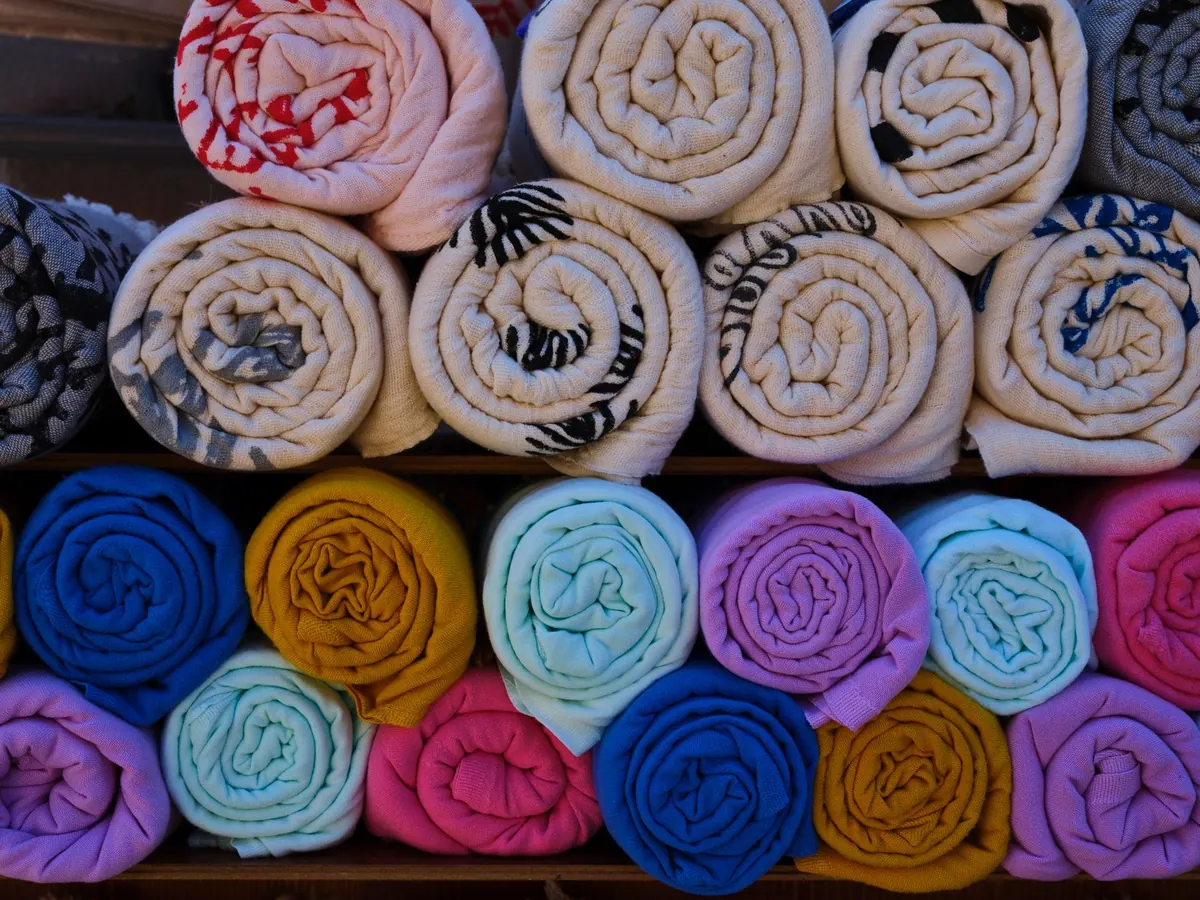
Roll large textiles rather than folding them for anything longer than a few weeks. In a humid climate, a crease holds moisture against the fibre and becomes the first place to weaken or spot. Interleave with acid-free tissue, roll loosely around a tube, and cover with a cotton sleeve rather than plastic, which can trap condensation when the temperature swings.
Wet work should dry flat, blotted and with the towels changed, in moving air rather than direct heat. When it comes to framing, keep glass off the surface with spacers, seal the backing, and hang on an interior wall rather than one that backs onto the outside or a bathroom. Mount with stitching to a padded board where you can; adhesives behave unpredictably in humid conditions and are difficult to reverse.
A Short Routine Worth Keeping
Buy the bulk of your materials in the dry months and buy small in the wet ones. Seal what you store, label it, lift it off the floor, and keep a sachet in anything that holds powder or metal. Recharge the desiccant at every change of season, and take ten minutes each month to open, smell and feel what you have.
None of this requires special equipment. It requires noticing, at the point of purchase and once a month afterwards, that the air in the room is part of the material's life — and that a little attention at the right moment is worth more than any single product on the shelf.
Photo: Engin Akyurt / Pexels